
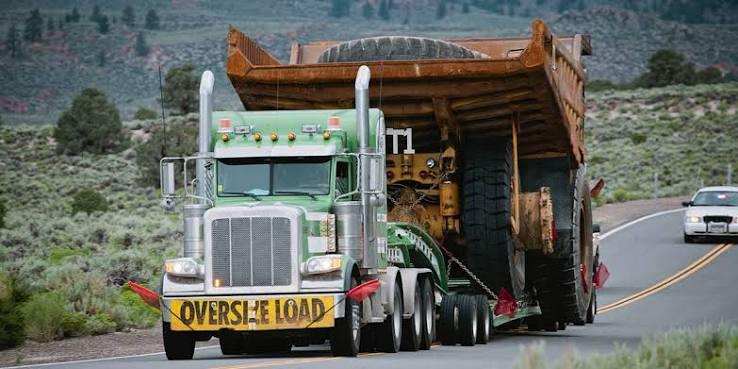
Oversized and Overweight Insurance in Cincinnati, Ohio: What Every Hauler Needs to Know
Cincinnati sits at one of the busiest freight crossroads in the entire Midwest. Interstate 75 runs north to south through the heart of the city, Interstate 71 feeds traffic in from Columbus and Louisville, and Interstate 275 loops around the metro connecting three states — Ohio, Kentucky, and Indiana — in a matter of minutes. Add in the Brent Spence Bridge, the Combs-Hehl Bridge, and the barge terminals along the Ohio River, and you have a city built for hauling heavy freight. If you’re a trucking company or owner-operator moving oversized loads through this corridor, oversized and overweight insurance isn’t optional — it’s the foundation of a legal, protected operation.
At Cincinnati Commercial Truck Insurance, we work with owner-operators and fleets across Hamilton County, Butler County, Warren County, and Clermont County every day. One of the most common calls we get is from haulers who didn’t realize their standard commercial auto policy stopped covering them the moment their load exceeded legal size or weight limits. This guide walks through everything you need to know about getting the right coverage in place — what it includes, why it matters, how Ohio permit rules affect your policy, and how to make sure your business is never caught without protection.
Why Cincinnati Truckers Need Oversized and Overweight Insurance
Cincinnati’s location makes it a natural hub for heavy haul and superload freight. Manufacturing plants throughout the Cincinnati-Dayton corridor ship transformers, industrial tanks, wind turbine components, and prefabricated steel structures that simply don’t fit inside a standard trailer. When a load exceeds Ohio’s legal limits — typically 8 feet 6 inches wide, 13 feet 6 inches tall, and 80,000 pounds gross weight — it becomes a permitted move, and permitted moves require oversized and overweight insurance that goes well beyond a basic auto liability policy.
Here’s the problem: many carriers assume their existing commercial trucking policy automatically extends to oversized freight. It doesn’t. Standard cargo and liability forms are written around legal-limit loads. The moment you pull a permit for a superload, your risk profile changes dramatically — wider swing radius, escort vehicle coordination, bridge and overpass clearance risk, and higher-value cargo all come into play, and a policy that doesn’t account for those factors will leave you exposed.
For Cincinnati-based haulers, this isn’t a theoretical risk. The Brent Spence Bridge corridor is one of the most congested freight bottlenecks in the country, and routes through downtown Cincinnati, Norwood, and Sharonville often require careful routing around low clearances, weight-restricted bridges, and narrow surface streets before a load ever reaches the interstate. Without proper oversized and overweight insurance, a single clearance strike or load shift on one of these routes can result in six-figure liability exposure that a standard policy simply will not touch.
What Does Oversized and Overweight Insurance Actually Cover?
This kind of coverage is not a single line item — it’s a package of protections built specifically for permitted, over-dimensional freight. When we put together oversized and overweight insurance for a Cincinnati client hauling superloads, we typically structure the policy around these core components:
Commercial Auto Liability for Oversized Loads This is the base layer of any specialized heavy-haul insurance program. Because oversized freight carries higher bodily injury and property damage exposure — think bridge strikes, utility line contact, and multi-vehicle incidents on tight Cincinnati interchanges — carriers typically require higher liability limits than a standard truck policy, often starting at $1 million and scaling up depending on the size and value of the load.
Cargo Insurance for High-Value and Specialized Freight Transformers, generators, wind blades, and modular buildings are expensive, and they’re also difficult to replace on short notice. A properly written policy includes cargo coverage sized to the actual replacement value of what you’re hauling, not a generic per-load cap that leaves you exposed.
Physical Damage Coverage on Specialized Trailers Lowboys, extendable flatbeds, RGNs (removable gooseneck trailers), and multi-axle modular trailers represent a significant capital investment. Your physical damage coverage should reflect the actual cost of these specialized trailers, since a standard flatbed endorsement often won’t come close to covering a true heavy-haul trailer.
Pilot Car and Escort Vehicle Liability Ohio permit rules frequently require pilot cars or escort vehicles for loads over certain width, length, or height thresholds. Whether you run your own escort vehicles or contract with a third-party pilot car service, this coverage needs to address the liability that comes with coordinating a multi-vehicle convoy through Cincinnati traffic.
Permit Bonds and Compliance Coverage Ohio requires permits for oversized and overweight loads, and those permits often come with bonding requirements tied to potential road or bridge damage. A complete permitted-load insurance package accounts for these compliance obligations so you’re never caught moving a superload without the paperwork the state requires.
General Liability and Umbrella Protection Given the scale of exposure that comes with hauling superloads through populated areas like downtown Cincinnati, Blue Ash, or West Chester, many of our clients layer a general liability policy and an umbrella policy on top of their base coverage for additional protection above their primary limits.
Ohio Permit Requirements That Affect Your Insurance
Understanding Ohio’s oversize and overweight permit system is essential to understanding why this coverage is structured the way it is. The Ohio Department of Transportation (ODOT) issues permits for loads exceeding standard legal dimensions, and the permit itself dictates the route, the time of day you can travel, and whether escort vehicles are required. Insurers writing this type of policy want to see that your permits, your routing, and your escort plan all line up, because a mismatch between what’s permitted and what actually happens on the road is exactly the kind of claim that gets denied.
For example, a load traveling through Cincinnati that exceeds 12 feet in width typically requires front and rear escort vehicles, along with restricted travel hours to avoid rush-hour congestion on I-75 and I-71. A load exceeding 14 feet 6 inches often requires a high-pole escort to check overhead clearances before the truck arrives at a bridge or overpass. Every one of these permit conditions is a risk factor your insurer will want documented, because it directly affects the likelihood and severity of a claim.
Weight is just as important as width and height. Ohio’s overweight permits are tied to axle configuration and bridge formula calculations, which matter enormously in a city like Cincinnati where aging bridge infrastructure — including several structures over the Mill Creek and the Ohio River — carries posted weight restrictions. A carrier that doesn’t structure its oversized and overweight insurance around accurate weight documentation is taking on unnecessary risk that a properly built policy is designed to eliminate.
Common Cincinnati Industries That Rely on Oversized and Overweight Insurance
Cincinnati’s manufacturing and logistics base means this type of coverage touches more industries than most people realize:
- Construction and heavy equipment haulers moving excavators, cranes, and bulldozers to job sites throughout Hamilton, Butler, and Warren counties
- Agricultural equipment transporters hauling combines and grain bins between rural southwest Ohio farms and dealerships
- Energy sector haulers moving transformers and substation components for utility projects across the Cincinnati service territory
- Modular and manufactured housing carriers delivering prefabricated homes and office units to growing suburbs like Mason, Liberty Township, and Fairfield
- Steel and industrial fabrication shippers serving Cincinnati’s manufacturing corridor along the Mill Creek Valley
- Port and river-adjacent freight haulers moving equipment to and from barge terminals along the Ohio River in Cincinnati and Northern Kentucky
Each of these operations depends on oversized and overweight insurance that’s tailored to its specific freight, routes, and equipment, which is exactly why a one-size-fits-all policy rarely works for permitted loads.
How the Quoting Process Works
Getting oversized and overweight insurance in place doesn’t have to be complicated, but it does require the right information up front. Here’s how we typically walk a Cincinnati client through the process:
- Tell us what you haul. Cargo type, average load value, and trailer configuration all shape how your policy is structured.
- Share your typical routes. Whether you’re running local Cincinnati routes or regional lanes into Kentucky and Indiana, route data helps carriers price your risk accurately.
- Provide your permit and escort plan. If you regularly pull ODOT permits or work with a pilot car service, that information helps us match you with a carrier comfortable underwriting superload freight.
- Compare quotes across multiple carriers. Because we’re not tied to a single insurance company, we shop your policy across several markets to find the best combination of price and coverage.
- Bind coverage and get instant proof of insurance. Once you choose a policy, we can get you set up with an instant Certificate of Insurance so you’re never stuck waiting on paperwork before a load needs to move.
How Much Does Oversized and Overweight Insurance Cost in Cincinnati?
Pricing varies significantly based on a handful of factors we walk through with every Cincinnati client:
- Load value and cargo type — a superload transformer worth $2 million carries very different cargo exposure than a modular home
- Trailer type — RGNs, extendable flatbeds, and multi-axle configurations each carry different physical damage rates
- Driving record and safety score — carriers with strong CSA scores and clean driving histories typically see better rates on their coverage overall
- Route frequency — regular Cincinnati-area routes with known bridge and clearance data are easier to underwrite than one-off superload moves
- Escort and pilot car arrangements — a documented, compliant escort plan can meaningfully reduce your premium
Because so many variables affect pricing, the only reliable way to get an accurate number is to work with an agency that actually understands heavy-haul freight in Ohio, rather than a generic online quote tool that treats every truck the same way.
Why Work With a Local Cincinnati Agency
Insurance carriers that write policies for permitted, over-dimensional freight want to see local knowledge behind every submission. When we put together a policy for a client hauling superloads across the Brent Spence Bridge or through the I-275 loop, we’re not guessing at bridge clearances or permit routing — we know this freight corridor because we’re headquartered right here in Cincinnati.
That local perspective matters in three specific ways:
We know Ohio’s permit and compliance system inside and out. From ODOT oversize/overweight permits to BOC-3 and MCS-90 federal filings, we make sure your policy lines up with every piece of paperwork Ohio and the federal government require.
We shop multiple carriers, not just one. Because we work with all the major insurance companies rather than a single captive carrier, we can compare heavy-haul coverage quotes side by side and find the best combination of price and coverage for your specific equipment and freight.
We’re available 24/7, and we can get you an instant Certificate of Insurance. Heavy-haul freight doesn’t run on a nine-to-five schedule, and neither do we. If a shipper or job site needs proof of your coverage on short notice, we can get you logged in to generate your own COI instantly.
What to Look for in a Policy
Before you sign off on any oversized and overweight insurance policy, walk through this checklist with your agent:
- Does the liability limit actually match the exposure of the freight you’re hauling, or is it a generic minimum?
- Is cargo coverage written to actual replacement value, not a flat per-load cap that undervalues specialized freight?
- Does the policy address pilot car and escort vehicle liability, or does that fall into a gap between your policy and a third-party escort company’s coverage?
- Are permit bonds and compliance requirements included, or will you need a separate bond every time you pull a permit?
- Does the carrier understand Ohio’s specific bridge, route, and weight-restriction rules, or are they underwriting blind?
A well-structured oversized and overweight insurance policy should answer every one of these questions clearly, in writing, before you ever put a permitted load on the road.
The Risk of Going Without Proper Coverage
We’ve seen what happens when a Cincinnati hauler tries to save a few dollars by skipping oversized and overweight insurance or assuming a standard trucking policy will stretch to cover a permitted load. A single bridge strike on a low-clearance overpass in Cincinnati’s urban core can generate structural damage claims, traffic disruption liability, and cargo loss all at once, and if your policy wasn’t written with oversized freight in mind, you may find yourself personally exposed for costs your insurer refuses to pay.
Beyond the financial risk, operating without adequate oversized and overweight insurance can also jeopardize your ability to pull future ODOT permits, damage your relationship with shippers who require proof of adequate coverage before releasing high-value freight, and put your operating authority at risk if a claim reveals a coverage gap during an active DOT investigation.
The bottom line: oversized and overweight insurance is not a box to check. It’s the difference between a permitted load that moves through Cincinnati safely and profitably, and one that turns into a business-ending liability event.
What Happens When You File a Claim
Filing a claim on a permitted, over-dimensional load looks different than filing a claim on a standard freight run, and it’s worth understanding the process before you ever need it. Because superload moves often involve multiple parties — the motor carrier, the pilot car service, the shipper, and sometimes a state or local road authority — a claim can touch several policies at once. That’s part of why the paperwork behind your permit matters just as much as the paperwork behind your coverage.
When one of our Cincinnati clients has an incident on a permitted route, the first step is always documentation: the permit itself, the approved route, photos of the load and the scene, and a record of exactly which escort vehicles were in place at the time. Carriers that specialize in heavy-haul freight expect this level of detail, and having it ready speeds up the claims process considerably. Missing or incomplete permit documentation is one of the most common reasons a claim gets delayed or disputed, so we walk every client through what to keep on hand before a load ever leaves the yard.
We also help coordinate between multiple carriers when a claim involves more than one policy — for example, if a third-party pilot car service was involved, or if a jobsite crane was damaged during unloading. Because we’re the ones who placed the coverage in the first place, we already know which carrier handles which piece of the claim, which saves our Cincinnati clients from getting bounced between adjusters trying to figure out who’s responsible for what.
Fast, well-documented claims handling isn’t just about getting a check faster. It also protects your safety record, your CSA score, and your ability to keep pulling ODOT permits without extra scrutiny down the road. A trucking business that handles claims cleanly tends to get better renewal terms year after year, which is one more reason it pays to work with an agency that understands this corridor and this type of freight.
Cincinnati Service Area
We provide oversized and overweight insurance to owner-operators and fleets throughout Greater Cincinnati, including Hamilton County, Butler County, Warren County, and Clermont County. This includes haulers based in and around Norwood, Sharonville, Blue Ash, West Chester, Mason, Fairfield, Milford, and the Northern Kentucky communities just across the river in Covington and Newport. Wherever your routes take you across the tri-state area, we can put together a policy that matches the freight you haul.
Frequently Asked Questions
Does my standard commercial truck insurance cover oversized loads? In most cases, no. Standard policies are underwritten around legal-limit freight. Once you pull an ODOT permit for a load that exceeds legal size or weight limits, you need oversized and overweight insurance specifically written for that exposure.
Do I need a permit and insurance for every oversized load in Ohio? Yes. Any load exceeding Ohio’s legal width, height, length, or weight limits requires an ODOT permit, and your policy should be structured to match the conditions of that permit, including any required escort vehicles.
How fast can I get oversized and overweight insurance in Cincinnati? Because we work with multiple carriers and can issue an instant Certificate of Insurance, most Cincinnati clients can have coverage in place within the same business day, even for time-sensitive superload moves.
Does oversized and overweight insurance cover pilot cars? It depends on how the policy is structured. Whether you run your own escort vehicles or hire a third-party pilot car service, make sure your policy explicitly addresses that liability rather than assuming it’s automatically included.
What happens if I get caught hauling an oversized load without proper insurance? Beyond fines and potential loss of your operating authority, you’re personally exposed to the full cost of any accident, cargo loss, or infrastructure damage. This is exactly the risk that oversized and overweight insurance is designed to eliminate.
Can I bundle oversized and overweight insurance with my existing fleet policy? In many cases, yes. If you already carry a policy for box trucks, flatbeds, or tractor-trailers through our agency, we can often add coverage for permitted, over-dimensional loads as an endorsement or a companion policy rather than starting from scratch, which can simplify your paperwork and your renewal schedule.
Get a Cincinnati Oversized and Overweight Insurance Quote Today
If you’re hauling permitted freight anywhere along I-75, I-71, I-275, or across the Brent Spence Bridge, don’t wait for a claim to find out your policy has a gap. Cincinnati Commercial Truck Insurance has spent years helping owner-operators and fleets across Hamilton County, Butler County, and the greater Cincinnati region put together oversized and overweight insurance that actually matches the freight they haul.
We’ll shop your policy across multiple carriers, structure your cargo and liability limits around your actual equipment and load values, and make sure your Ohio permits and your insurance are working together instead of leaving you exposed. Give us a call at (513) 776-2414, request an online quote, or stop by our office at 2060 Reading Rd Suite 550, Cincinnati, OH 45229 to talk through your oversized and overweight insurance needs with someone who knows this freight corridor as well as you do.
Your next superload deserves a policy built for it. Let’s get your oversized and overweight insurance in place before that load hits the road.
